
Inspection That Maps the Problem
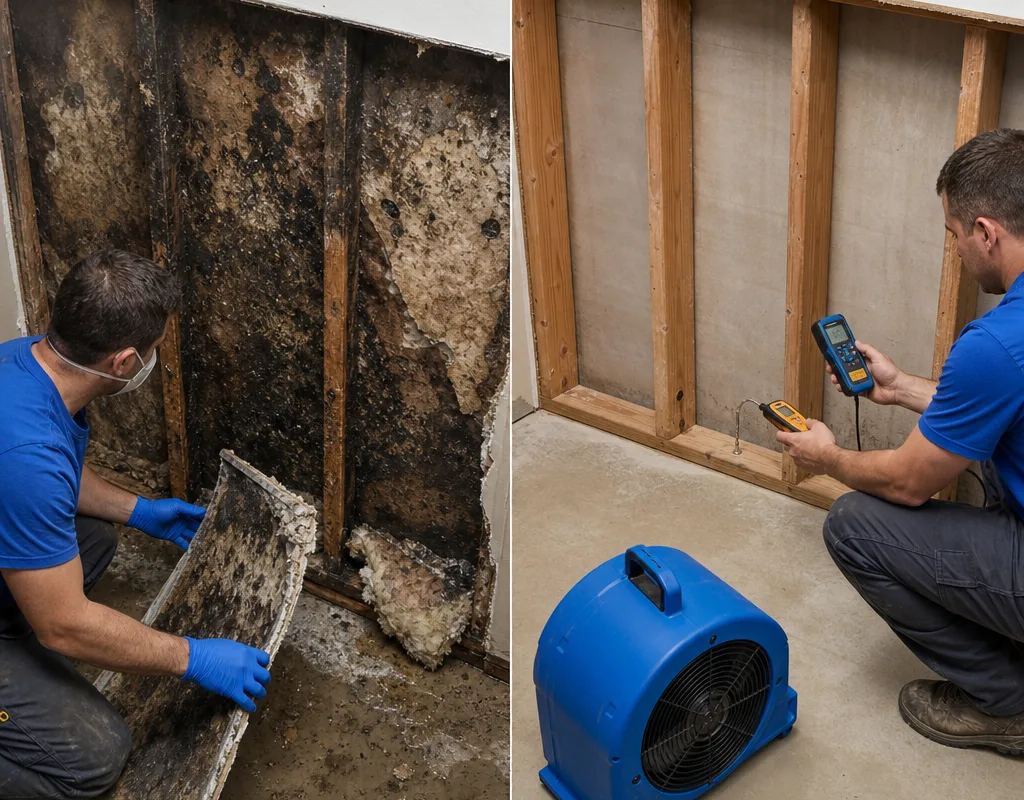
We look for visible growth, moisture pathways, and the conditions that let mold return, including active leaks, condensation, wet insulation, and poor airflow. The goal is a clear, room-by-room scope.
Serving Waukesha, Wisconsin & surrounding areas
24/7 Emergency Response
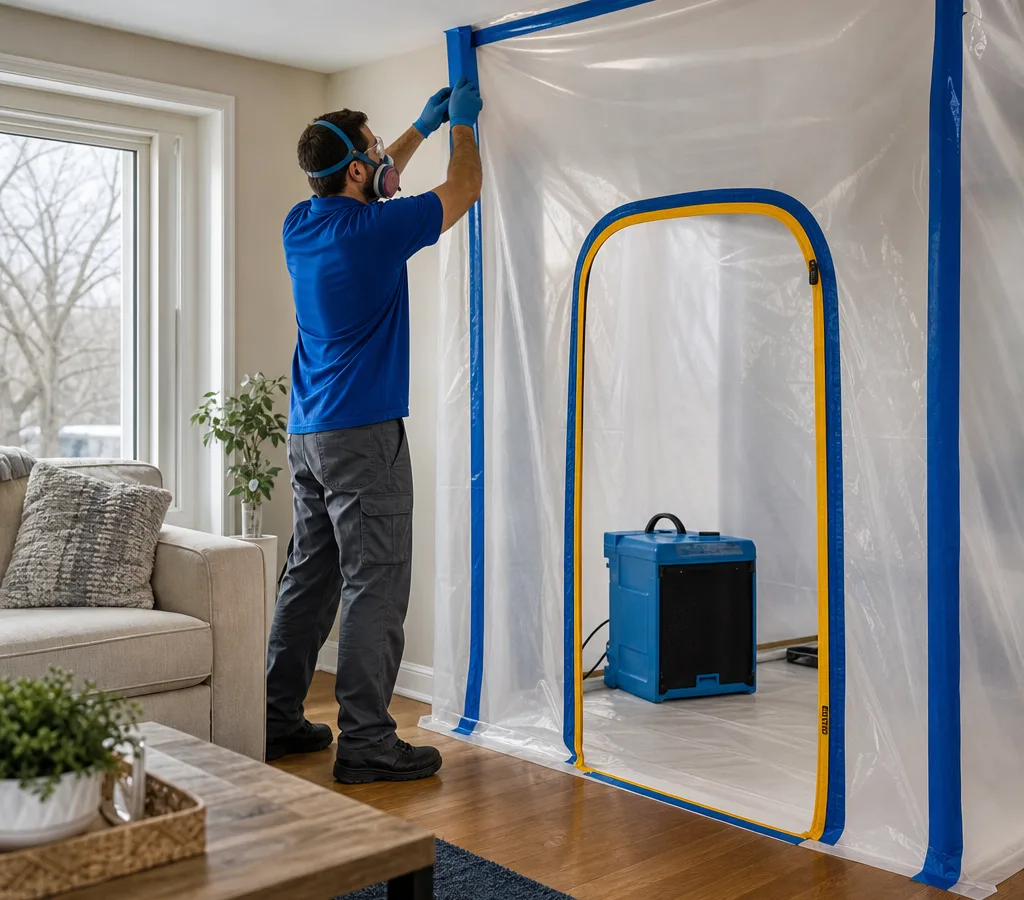
Mold remediation in Waukesha, WI
If you smell a musty odor, see staining, or had a recent leak, the next step is a careful inspection and a containment-first cleanup plan that keeps spores from spreading through your home or building.
✓ Skip the 3-hour Google rabbit hole — we’ve already done the vetting
✓ One conversation, not ten voicemails and seven web forms
✓ 24/7 emergency response — talk to a real person who knows Waukesha
A real person answers - 24/7 Emergency Response
Source-first mold remediation
When you search for mold remediation Waukesha, you are usually dealing with one of two problems: a moisture issue that has been going on for a while—such as a slow leak, humidity, or poor ventilation—or water damage that never fully dried. Either way, mold cleanup only works when the moisture source is identified and addressed first.
Water Damage Waukesha handles mold remediation for homes and commercial spaces across Waukesha, WI. We focus on practical, jobsite-ready steps: confirm what is affected, isolate the work area, remove contaminated materials when required, clean and HEPA-filter the air, and document the work so you know what was done and why.
If you are also dealing with the original leak or flood event, start with water damage restoration so drying and remediation stay coordinated and you do not end up paying twice for overlapping work.
A containment-first scope
We look for visible growth, moisture pathways, and the conditions that let mold return, including active leaks, condensation, wet insulation, and poor airflow. The goal is a clear, room-by-room scope.
The work area is isolated with plastic sheeting and controlled airflow so spores stay where cleanup is happening instead of drifting into hallways, adjacent rooms, or HVAC returns.
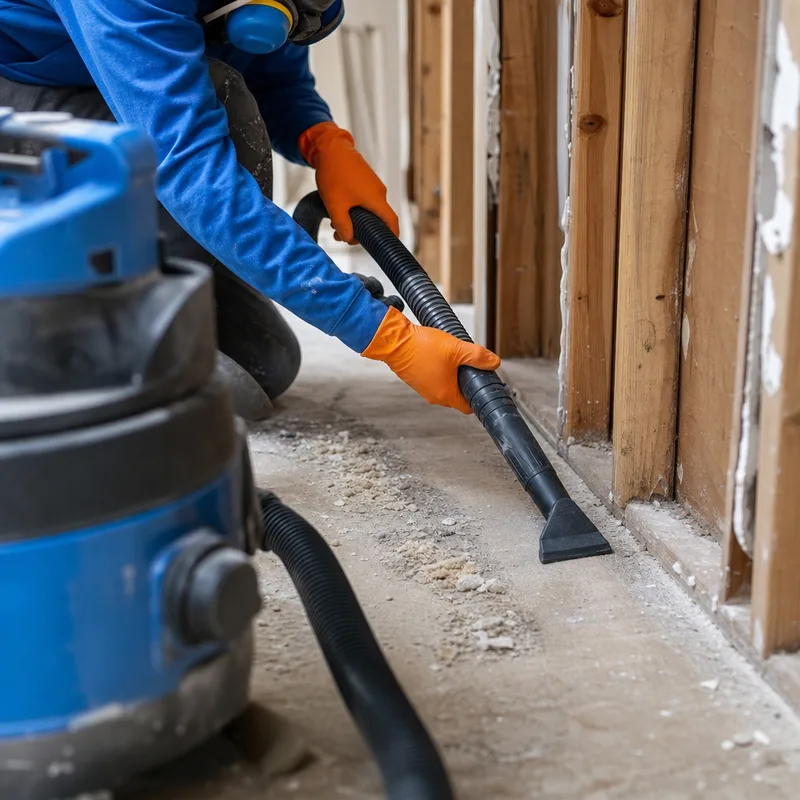
Porous, heavily affected materials such as drywall, carpet pad, or insulation often cannot be cleaned back to normal. When needed, we remove and bag materials for proper disposal.
We use HEPA air scrubbers and HEPA vacuuming along with damp wiping of hard surfaces. This distinguishes a cosmetic wipe-down from remediation that reduces residual contamination.
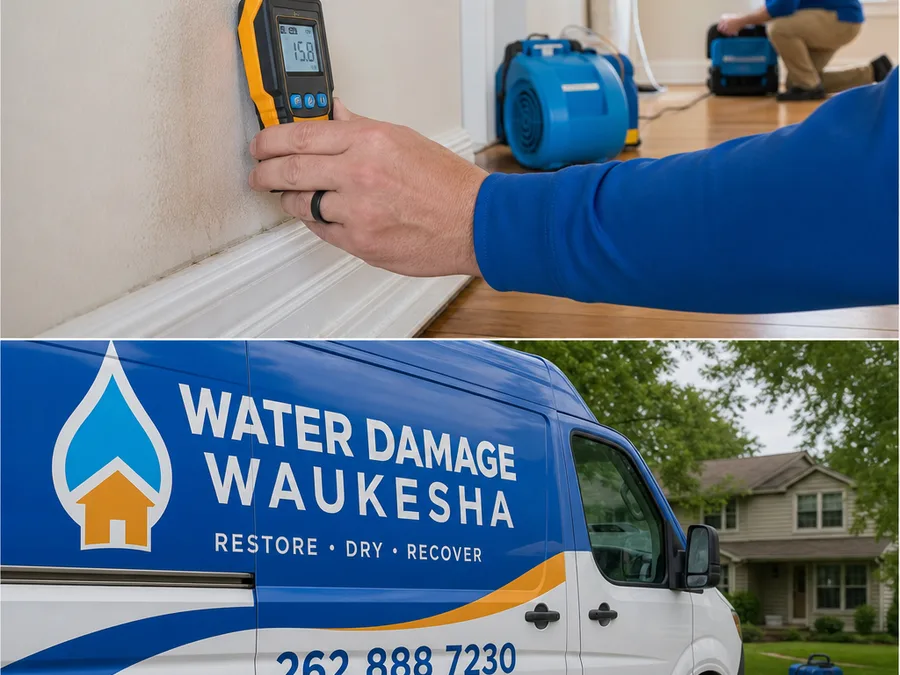
After cleanup, the space must be dry enough to remain stable. We verify moisture in building materials and identify fixes that can prevent recurrence, such as plumbing repair or ventilation improvements.
You receive a written scope and summary of what was remediated, what materials were removed, and what follow-up steps are recommended before rebuild or repaint.
Hidden moisture changes the scope
Mold does not need a dramatic flood to take hold. In Waukesha, common calls follow everyday building failures, especially in finished lower levels and tight, humid rooms.
Common situations that lead to remediation work include:
We work in all types of housing stock, from older homes with layered renovations to newer builds with tightly sealed envelopes where ventilation matters. The plan changes depending on whether mold is on a surface, inside a wall cavity, or embedded in porous materials.
For lower-level issues, we pay special attention to hidden moisture behind finished walls, under floating floors, and at rim joists. Those are common places for mold to persist when the scope is too shallow.
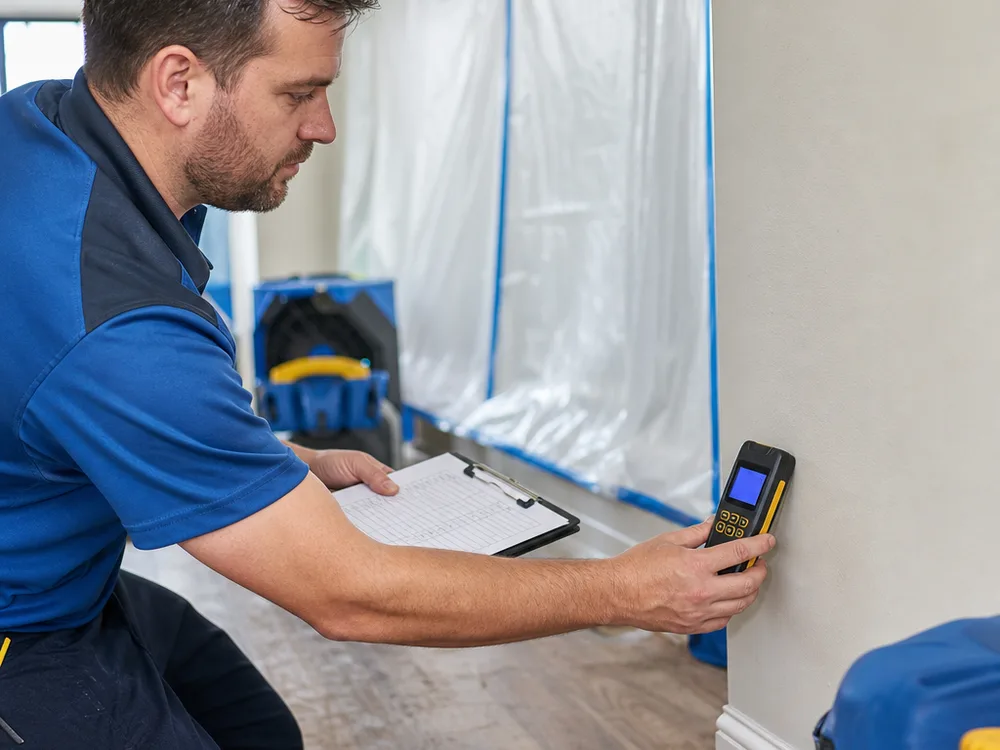
Controlled from inspection through verification
Each stage limits spread, removes affected material when necessary, and verifies that moisture conditions are stable before repair or rebuild.
01
We identify affected areas, track moisture with meters or thermal imaging where appropriate, and determine whether the issue is surface-level or likely inside cavities. You get a clear scope before work begins.
02
We isolate the work zone with plastic sheeting and establish negative pressure when needed. HEPA air scrubbers start running early to control airborne particles during disturbance.
03
When materials are not salvageable, we remove them in a way that limits spore release. Contents are protected or moved as required so cleanup stays focused and the rest of the property remains usable.
04
Hard surfaces are cleaned with appropriate antimicrobial products, then HEPA vacuumed and wiped. We do not rely on fragrance or fogging as a substitute for physical removal and filtration.
05
We dry the area to appropriate moisture levels and verify that structural materials are no longer wet. If the moisture source remains active, we pause and coordinate correction so the mold does not return.
06
We review what was done, what was removed, and what is ready for repair or rebuild. Clear documentation can help keep decisions moving with insurance or a property manager.
Clear scope before work begins
Mold remediation in Waukesha typically ranges from about $1,500 to $6,500 for many residential projects, with small, contained cleanups sometimes closer to $800 to $1,500 and larger multi-room or crawlspace and basement scopes reaching $8,000+ when demolition and drying are extensive. Final cost depends on the affected area, whether drywall, insulation, or flooring must be removed, access, the required containment and HEPA filtration, and whether the moisture source needs correction. The exact scope and price are confirmed after an on-site inspection and moisture assessment.
📞 Waukesha • 24/7 ResponseContain, clean, dry, verify
Clear answers before cleanup begins
Most mold remediation jobs take 1 to 3 days once work starts, but timelines extend when drying is needed or demolition exposes additional affected materials. A small contained area may be completed in a day, while basements, multiple rooms, or projects involving wet insulation and framing can take several days plus drying time.
Remediation can be performed with or without lab testing, depending on your goal. Testing can help establish baseline and post-work conditions for a buyer, tenant, insurer, or sensitive-occupant situation. When growth is visible and the scope is clear, the priority is containment, removal, cleaning, and correcting moisture.
Sometimes, when mold is truly limited to cleanable surfaces and the material is not water-damaged. If drywall, insulation, carpet pad, or pressed wood has been wet and growth is established, removal is often appropriate because porous materials can hold contamination below the surface.
Often it is, provided the affected area can be fully contained and workers have a clean route for equipment. If mold is in a main living area, near HVAC returns, or involves multiple rooms, it may be more comfortable to stay elsewhere during active demolition and cleaning.
Bleach can lighten staining on some hard, non-porous surfaces, but it is not a reliable remediation method for porous building materials such as drywall or wood framing. Professional remediation controls airflow, physically removes contaminated materials when needed, uses HEPA filtration, and applies cleaning methods suited to the surface.
If it is safe, stop the water source, avoid disturbing the area, and do not run fans that blow toward other rooms. Keep children and pets away. Clearing a route for equipment and access to a nearby outlet can help setup move faster.
Insurance sometimes helps when mold results from a covered water event, but coverage varies by policy and cause. We provide a written scope and documentation of what we found and completed, which is often what adjusters and property managers need to make decisions.
Mold remediation in Waukesha
Tell us what you are seeing and where it is showing up. We will schedule an inspection, explain the scope in plain language, and outline the next steps for safe, thorough mold remediation in Waukesha.