
Containment That Fits the Scope
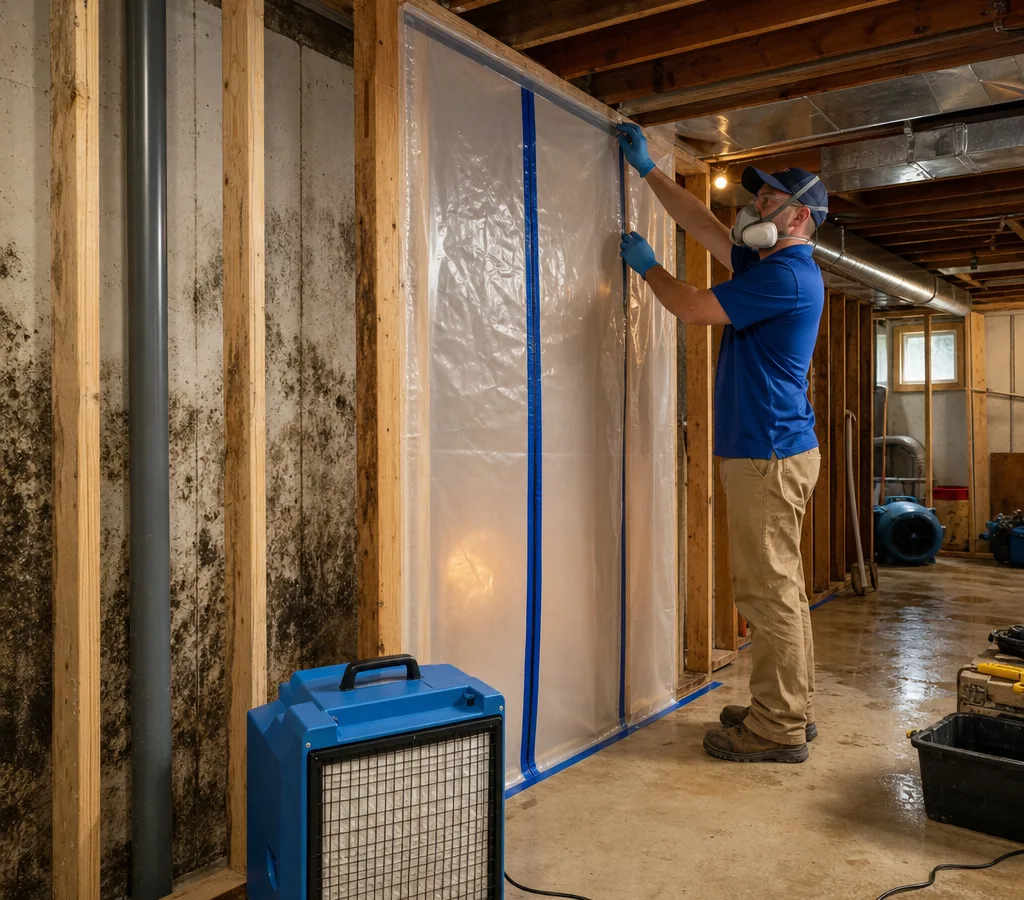
We isolate the work area with plastic sheeting and controlled entry points, so disturbance stays inside the zone instead of drifting through the house.
Serving Waukesha, Wisconsin & surrounding areas
24/7 Emergency Response
Mold remediation in Waukesha, WI
Get a clear plan for safe cleanup, tight containment, and verified drying after moisture problems. We inspect first, explain what is needed, and document the work so you can move back into a healthy space with confidence.
✓ Skip the 3-hour Google rabbit hole — we’ve already done the vetting
✓ One conversation, not ten voicemails and seven web forms
✓ 24/7 emergency response — talk to a real person who knows Waukesha
A real person answers - 24/7 Emergency Response
Source control before surface cleaning
Mold removal in Waukesha is rarely just a surface cleaning job. Mold follows moisture, so a good remediation plan starts by finding where water or humidity is getting in, then removing affected materials under containment, cleaning remaining surfaces with HEPA methods, and drying the structure back to normal.
In the Waukesha area, common triggers include seepage after heavy rain, damp basements, ice-dam related leaks, and plumbing failures that soak drywall or insulation. If the underlying moisture is not corrected, mold can return even after a deep clean.
Water Damage Waukesha handles mold removal with an inspection-first approach: we identify the affected areas, explain what should be removed versus cleaned, and lay out the steps needed to keep spores from spreading to the rest of the home. For projects that start with a sudden leak or flood, water damage restoration can be coordinated so drying and remediation move in the right order.
Contain, remove, clean, and verify
We isolate the work area with plastic sheeting and controlled entry points, so disturbance stays inside the zone instead of drifting through the house.
Air scrubbers and HEPA filtration reduce airborne particles during demolition and cleaning, especially in basements, crawlspaces, and tight utility rooms.
Porous materials like wet drywall, insulation, carpet pad, and heavily affected wood may need removal because they cannot be reliably cleaned to a safe standard.
After removal, remaining surfaces are cleaned using HEPA vacuuming and appropriate antimicrobial methods, followed by a final HEPA pass once dry.
We dry structural materials and confirm moisture levels before the area is closed back up, because closing a damp cavity can restart the problem.
You get a written scope, photos as needed, and practical guidance on preventing recurrence, including ventilation, humidity control, and leak watch points.
Find the full extent, not just the stain
Every property is different, but the same hidden spaces show up again and again during mold inspections and cleanup.
Basements and lower levels: Condensation on cold foundation walls, minor seepage, or long-term humidity can feed mold behind finished walls, under flooring, or around rim joists.
Bathrooms and laundry areas: Slow leaks at supply lines, wax rings, or shower surrounds often wet subflooring and drywall. Exhaust fan issues and poor airflow can keep moisture trapped.
Attics and rooflines: Ventilation problems and roof leaks can cause growth on sheathing and truss members. The right fix depends on whether the moisture is from bulk water, condensation, or both.
Garages and mudrooms: Wet gear, snowmelt, and temperature swings create intermittent dampness that can affect shared walls or adjacent utility rooms.
If you are seeing staining, musty odor, or recurring allergy-like symptoms in a specific room, the goal is to locate the full extent, not just treat what you can see. A proper mold removal plan focuses on the source, the spread, and the materials involved.
Controlled from assessment through drying
Each stage is designed to control spread, remove affected materials, clean remaining surfaces, and verify that the structure is ready for repair.
01
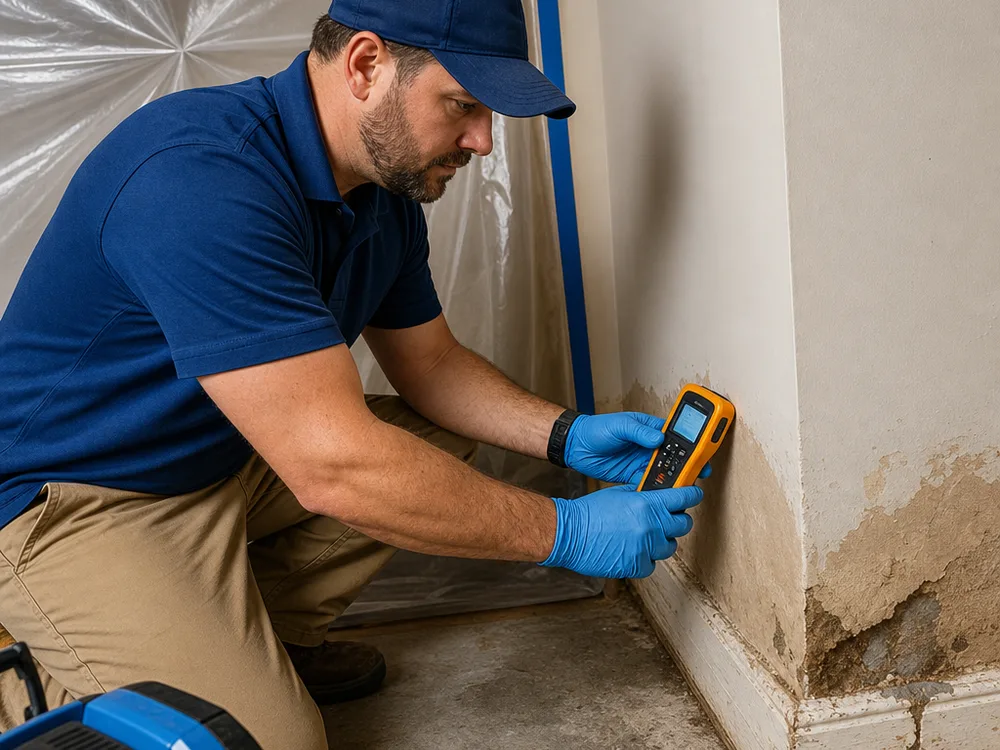
We walk the affected areas, look for the moisture path, and check adjacent spaces where spores often travel, including behind trim, inside closets, and around HVAC returns. You get a clear scope for what will be removed, cleaned, dried, or repaired first.
02
We protect floors and paths, isolate the work zone, and set up negative air where appropriate. This limits cross-contamination when materials are opened up.
03
Damaged porous materials are removed using controlled methods and bagged out. This is often the key step for lasting results when drywall or insulation is involved.
04
We HEPA vacuum and clean remaining surfaces in the containment area, including framing, masonry, and other non-porous materials that can be remediated.
05
We dry the area as needed and confirm the structure is ready to be closed back up. If a separate repair trade is needed after remediation, we explain what must happen before rebuild.
Written scope before remediation begins
Mold removal in Waukesha typically ranges from about $750 to $3,500 for smaller, contained areas, while larger projects with demolition, multiple rooms, or extensive drying often run $4,000 to $10,000+.
Pricing depends on how far the growth spread, whether drywall or insulation must be removed, access in an attic or crawlspace, the need for negative air, and how much drying is required after a leak.
The exact cost is confirmed after an on-site inspection and a written scope, since the visible area is not always the full affected area.
Clear answers before anything is closed up
“We had a musty smell in the basement that kept coming back. The team explained what was happening, built a containment area, removed the affected drywall, and showed us the moisture readings before they closed anything up. The space finally smells normal again.”
“After a plumbing leak we were worried about mold spreading into the rest of the house. They kept the work area sealed, cleaned everything thoroughly, and documented the steps so we knew what was done.”
If you suspect mold, get an inspection and written scope before tearing materials out or running fans in the wrong place.
Answers before cleanup starts
In many cases we can start quickly once the area can be accessed safely, because delays let moisture soak deeper into drywall, trim, and insulation. If the space is still wet, drying and moisture control usually need to happen first or alongside remediation so the cleanup lasts.
Testing is not always required to proceed with remediation when there is visible growth or obvious moisture damage, because the cleanup method is driven by materials and contamination level. If you need lab results for a specific reason, we can discuss whether sampling is useful and what questions it would answer.
Sometimes, if the affected surface is non-porous or the contamination is limited to a cleanable area. If mold is in drywall paper, insulation, carpet pad, or other porous materials, removal is often the reliable option because those materials cannot be fully cleaned once impacted.
Fans and dehumidifiers help dry a space, but they do not remove contaminated porous materials or the settled spores and debris left after growth. Aggressive airflow without containment can also move particles into other rooms, so it is better to get a plan before trying to dry everything on your own.
It depends on the size and location of the affected area and whether it can be fully contained. For a small, isolated area, occupants can often remain while the work zone is sealed and filtered; for larger projects or sensitive occupants, a temporary alternative may be recommended until cleaning and drying are complete.
Avoid disturbing the affected area, and do not pull drywall or insulation because that can release particles into the air. If it is safe, stop the moisture source by shutting off the fixture or valve and keep doors to the area closed until we can evaluate containment and the next steps.
Mold removal in Waukesha
Tell us what you are seeing and where it is happening. We will schedule an inspection, provide a written scope, and walk you through containment, removal, and drying so you know exactly what will happen in your home.